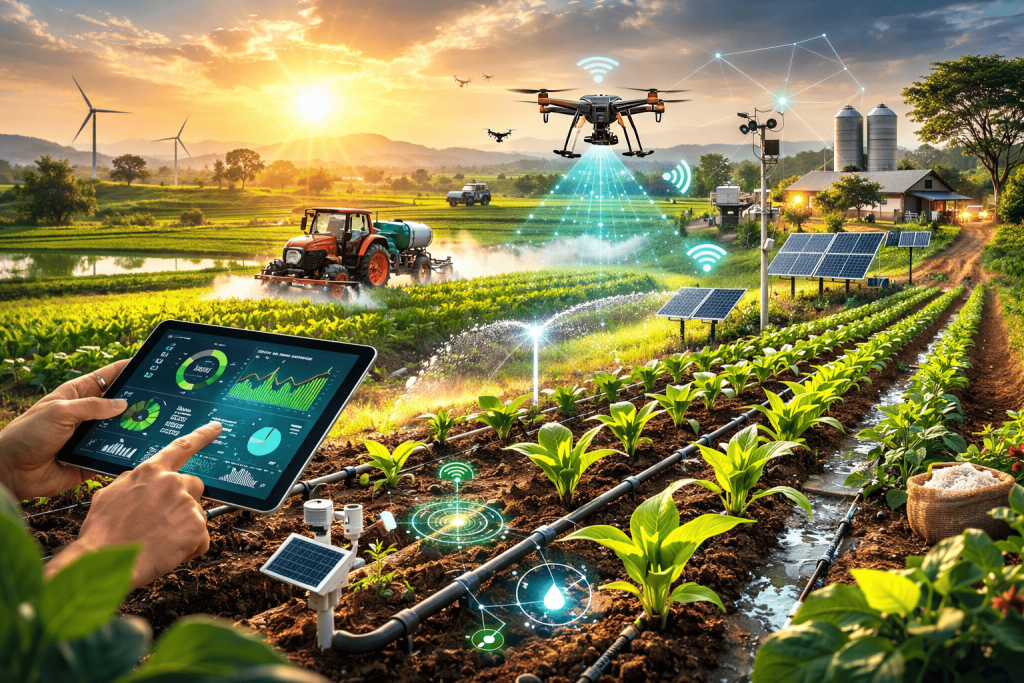
Agriculture is undergoing a major transformation as digital technologies and smart farming tools become more widely adopted. Farmers today are increasingly using advanced technologies to monitor crops, manage soil conditions, and improve productivity with greater precision.
Digital agriculture integrates modern technologies such as sensors, satellite monitoring systems, weather data, and farm management software to help farmers make better decisions. These tools allow agricultural professionals to optimize irrigation, crop nutrition, and resource management.
As farming systems become more advanced, digital agriculture is playing a critical role in improving crop productivity and supporting sustainable agricultural practices.
What is Digital Agriculture?
Digital agriculture refers to the use of technology and data-driven tools to improve farming operations. By collecting real-time data from fields, farmers can monitor crop health, soil moisture levels, and environmental conditions more effectively.
Some common digital agriculture technologies include:
Satellite crop monitoring systems
Soil and weather sensors
GPS-enabled farm equipment
Data-based farm management platforms
These tools help farmers understand field conditions and make informed decisions regarding irrigation, fertilization, and crop protection.
Precision Agriculture and Nutrient Management
One of the most important benefits of digital agriculture is its ability to support precision agriculture practices. Precision farming allows agricultural inputs to be applied in the right quantity and at the right time.
Efficient nutrient management is essential in modern farming systems. Crops require balanced nutrition to maintain healthy growth, and precise application of fertilizers helps improve nutrient efficiency while reducing resource wastage.
In many modern farming programs, water-soluble fertilizers, liquid fertilizers, and chelated micronutrients are commonly used because they provide fast nutrient availability and compatibility with precision farming techniques.
Solutions such as specialty NPK formulations, liquid NPK fertilizers, and chelated micronutrients offered by TCL Chem are designed to support efficient crop nutrition programs that align well with precision agriculture practices.
Benefits of Smart Farming Technologies
Smart farming technologies provide several advantages that help improve agricultural productivity.
Improved Crop Monitoring
Farmers can monitor crop growth and field conditions more accurately using digital tools and remote sensing technologies.
Efficient Use of Agricultural Inputs
Water, fertilizers, and other crop inputs can be applied in a more controlled and efficient manner.
Higher Productivity
Precise crop management practices help improve plant health and increase yield potential.
Sustainable Farming Practices
By reducing unnecessary input usage, digital agriculture supports environmentally responsible farming methods.
Integration with Modern Crop Nutrition Programs
Digital agriculture is often combined with advanced crop nutrition strategies to optimize plant growth and productivity. Fertigation systems, foliar nutrition programs, and precision fertilizer application methods are increasingly used in modern agriculture.
Products such as liquid fertilizers, specialty nutrient formulations, and plant biostimulants play an important role in these systems by improving nutrient availability and supporting plant metabolism.
Crop nutrition solutions developed by companies such as TCL Chem are formulated to deliver consistent nutrient performance and compatibility with modern agricultural practices.
Future of Smart Farming
As global agriculture continues to evolve, digital technologies will become even more important in crop management. Innovations such as artificial intelligence, automated farming equipment, and advanced data analytics are expected to further improve agricultural efficiency.
These advancements will allow farmers to manage crops more accurately, optimize resource use, and improve overall agricultural productivity.
Conclusion
Digital agriculture and smart farming technologies are reshaping the way crops are grown and managed. By combining modern technologies with efficient crop nutrition strategies, farmers can improve productivity while using resources more efficiently.
As agriculture continues to adopt innovative farming practices, integrated solutions that combine technology and advanced crop nutrition will play a crucial role in supporting sustainable agricultural development.